As warehouses grow, change, and expand, the moment dreaded by all management may eventually arrive: relocating your largest installations.
Whether you need to rearrange your warehouse to prioritize your biggest items, you’re dismantling to move into a brand-new facility, or you simply need to shift something to make room for new shelving, improperly moving your pre-installed warehouse shelves can be a significant hassle.
Pallet racks, in particular, are among the most challenging items to disassemble and reinstall. They involve numerous components, and transporting them safely to their new location can be a complex task in itself.
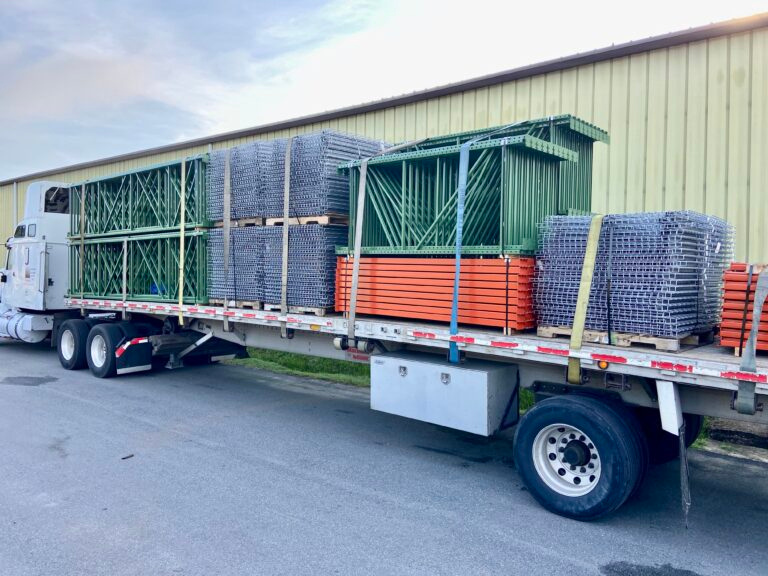
To better prepare for the next time you need to move a pallet rack, here are a few tips to help make the process smoother:
Disassemble as slowly as possible
The key point to remember is that there are many small parts and things that can go wrong when dismantling a pallet rack. Your teams need to remove each piece slowly and carefully to ensure nothing is lost or damaged. Pay attention to small components like retaining pins, keep them in a designated place to avoid losing them, and move everything else gently to prevent damage.
Label parts as needed
If your pallet racks haven’t been marked for specific uses, now is a good time to start labeling everything as you disassemble it. Use colored masking tape or electrical tape to identify which parts belong to each pallet rack, helping to keep everything organized.
Check for damage
While dismantling a pallet rack for transport, perform a quick inspection for damage and other issues. Look for bent uprights, damaged mounting brackets, curved step beams, and similar problems, and mark them for repair or replacement before reassembling the pallet rack at its new location.
Set a traffic path
If you’re moving your pallet racks within the same building, define the destination and the route they will take. Set up warehouse guard rails to outline the path, and ensure your staff knows not to cross these lines to avoid accidents, injuries, or product damage.
Inspect their final destination
Finally, before moving the racks to their new location, ensure the area is safe and ready for installation. Measure to confirm there’s enough space for the pallet rack without obstructing traffic or crowding nearby shelves, and check that the ground is level and even to prevent accidental sliding or damage later on.
FAQ’s
Why is it important to disassemble pallet racks slowly?
Disassembling pallet racks slowly is crucial because it minimizes the risk of losing or damaging small parts. Moving carefully ensures that all components, such as retaining pins, are kept track of and that the larger parts are handled gently to avoid any damage.
How can labeling parts help during the disassembly of pallet racks?
Labeling parts during disassembly helps keep everything organized. Using colored masking tape or electrical tape to mark which parts belong to each pallet rack ensures that reassembly is easier and that parts don’t get mixed up or lost.
What should I look for when checking pallet racks for damage during disassembly?
During disassembly, inspect for bent uprights, damaged mounting brackets, curved step beams, and other issues. Identifying and marking these damaged parts for repair or replacement ensures that the pallet rack can be safely reassembled at its new location.
Why is it necessary to set a traffic path when moving pallet racks within the same building?
Setting a traffic path is necessary to ensure the safe and efficient movement of pallet racks. Defining the route with warehouse guard rails helps prevent accidents, injuries, and product damage by keeping staff aware of where they should and shouldn’t be during the move.
What should be checked at the final destination before installing pallet racks?
Before installing pallet racks at their new location, ensure that the area is safe and suitable. Check that there is enough space for the racks without disrupting traffic or crowding other shelves, and confirm that the ground is level and even to prevent accidental sliding or damage.
What are some tips for safely transporting pallet racks to a new location?
Safely transporting pallet racks involves careful disassembly, proper labeling of parts, thorough inspection for damage, setting clear traffic paths, and ensuring the final destination is prepared. Moving slowly and methodically helps ensure that all components arrive intact and ready for reassembly.
Conclusion
Relocating pallet racks can be challenging, but careful planning can ease the process. Disassemble slowly, label parts, check for damage, set clear traffic paths, and ensure the new location is ready. These steps help protect your equipment, ensure safety, and maintain operational efficiency, making the move more manageable.