
Let’s be direct: Certain warehouses using roll-formed racking should consider switching to structural racking, and vice versa. To ensure your warehouse avoids this issue, we’ll discuss the distinctions between these two types of racking and their respective pros and cons.
Roll-Formed Racking
Roll-formed racking is created through stamping and cold rolling standardized components that can be interconnected without relying on nuts and bolts for assembly. The prevalent style of roll-formed racking systems is a “Redirack style” profile. Usually, frames are crafted from 13- or 14-gauge steel, with beams typically ranging from 14 to 16 gauge. Despite its lightweight construction, the shape and profile of roll-formed racking impart more strength than one might assume.
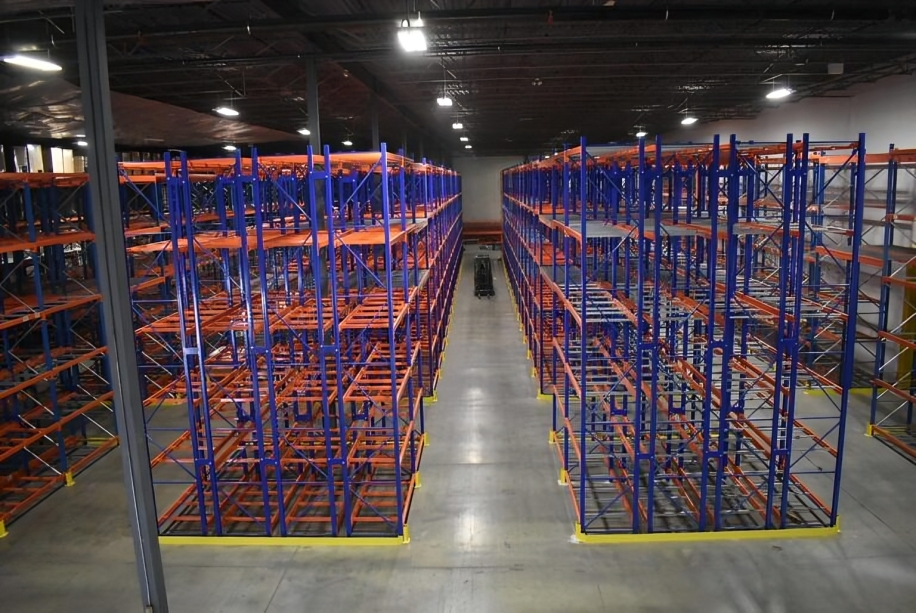
Advantages of Roll-Formed Racking
- It’s more cost-effective compared to structural racking due to its utilization of lighter gauge steel.
- Simple and swift to assemble and disassemble without requiring nuts and bolts.
- Uprights permit easy adjustment of beam elevations, facilitating customization and reconfiguration to adapt to evolving storage requirements.
- The use of lighter gauge steel can prove advantageous if the racking requires frequent relocation or reconfiguration.
Disadvantages of Roll-Formed Racking
- It is less durable than structural racking, which increases its vulnerability to impact damage from forklifts and other equipment, thereby limiting its weight-carrying capacity.
Structural Racking
Structural racking is constructed using hot-rolled structural steel. Typically, the frames and beams are composed of C-channel and structural L-angle components. In some cases where cost is a significant consideration, beams may be made from roll-formed material. The beams are secured to the frames using bolts to ensure system rigidity.
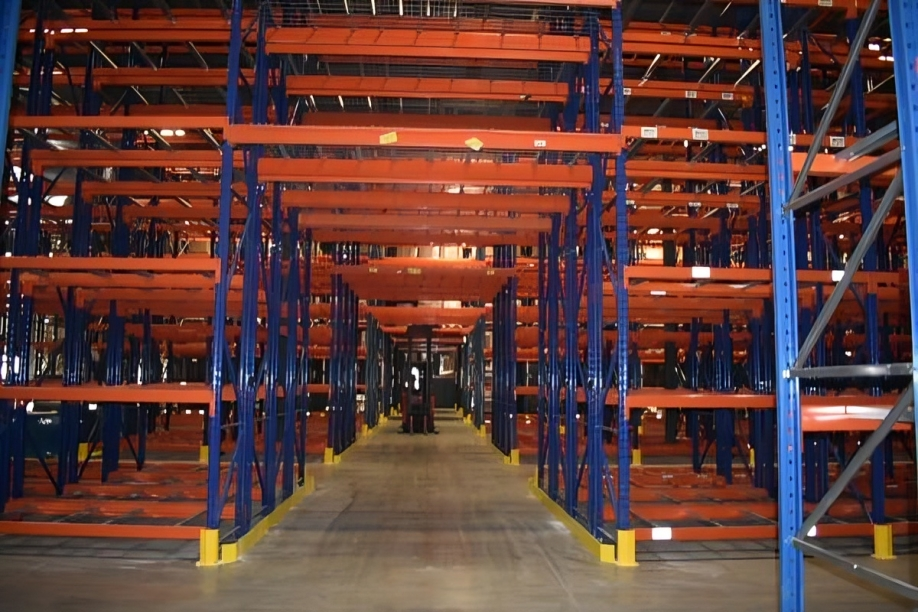
Advantages of Structural Racking
- Crafted from more robust materials, structural racking is designed to withstand heavier loads and endure impacts from forklifts and other equipment without sustaining damage.
- This longevity results in a better return on investment. While roll-formed racking may have a lifespan of 5-7 years, structural racking can last up to 20 years.
Disadvantages of Structural Racking
Ordering requires a longer lead time because the racking is manufactured to specific specifications.
- The higher cost is attributed to its heavy-duty construction and the use of high-strength steel components.
- Installation is more complex and time-consuming due to the need to bolt each beam and beam level together, which requires skilled labor at a higher expense.
- Adjusting beam levels or replacing parts is more difficult, time-consuming, and expensive compared to roll-formed racking, making it less flexible.
Differences Between Roll-Formed Racking and Structural Racking
Roll-formed racking is typically used for medium-duty applications with lower pallet movement volumes. It’s also suitable for storing small or medium-sized items like boxes, bins, and cartons, making it convenient for warehouses requiring versatile storage for various product sizes or seasonal changes.
Often utilized in space-constrained environments where cost efficiency is key, roll-formed racking finds frequent use in retail and third-party logistics warehouses.
Structural racking systems excel in environments with heavy pallet movement and substantial weight loads, or where the risk of impact from forklifts and other equipment is elevated. They are particularly well-suited for drive-in/drive-through warehouses, where vehicles frequently navigate narrow bays, increasing the likelihood of collisions with racking. Structural racking is prevalent in industries such as food and beverage and cold storage.
FAQ’s
What factors should I consider when deciding between roll-formed racking and structural racking for my warehouse?
Several factors should influence your decision, including the expected load capacity, frequency of pallet movement, potential for impact damage from equipment like forklifts, and the desired flexibility of your storage system.
Is roll-formed racking suitable for heavy-duty storage needs?
Roll-formed racking is generally better suited for medium-duty applications with lower pallet movement volumes. While it can handle substantial loads, structural racking may be more appropriate for heavy-duty storage requirements due to its durability and weight-bearing capacity.
How does the assembly process differ between roll-formed racking and structural racking?
Roll-formed racking typically features a simpler assembly process, as components can be interconnected without the need for nuts and bolts. In contrast, structural racking requires bolting each beam and beam level together, which can be more time-consuming and labor-intensive.
What are the main advantages of structural racking over roll-formed racking?
Structural racking offers greater durability and longevity due to its construction from hot-rolled structural steel. It can withstand heavier loads and endure impacts from equipment like forklifts without sustaining damage. Additionally, structural racking tends to have a longer lifespan, providing a better return on investment in the long run.
In what types of warehouses is roll-formed racking commonly used?
Roll-formed racking is often found in warehouses with medium-duty storage needs and lower pallet movement volumes. It is also suitable for facilities that require versatility in storing various product sizes or undergo seasonal changes in inventory.
What industries commonly utilize structural racking systems?
Structural racking systems are prevalent in industries with heavy pallet movement and substantial weight loads, such as food and beverage and cold storage facilities. They are also commonly used in environments where the risk of impact damage from forklifts and other equipment is high, such as drive-in/drive-through warehouses.
Conclusion
The choice between roll-formed racking and structural racking hinges on various factors, including load capacity, frequency of pallet movement, durability requirements, and space constraints. Roll-formed racking offers cost-effectiveness, easy assembly, and adaptability for warehouses with medium-duty storage needs. On the other hand, structural racking provides superior durability, longevity, and weight-bearing capacity, making it ideal for environments with heavy pallet movement and high-risk impact scenarios. Ultimately, understanding the distinct advantages and disadvantages of each type of racking is crucial for optimizing storage efficiency and ensuring the long-term success of your warehouse operations.