
Protecting your warehouse and team from fires is a crucial priority. Annually, an average of 1,450 warehouse fires in the U.S. cause hundreds of millions of dollars in property damage, endanger workers’ lives, and can halt productivity. Installing pallet rack sprinklers is a highly effective method to reduce this risk and improve warehouse fire safety.
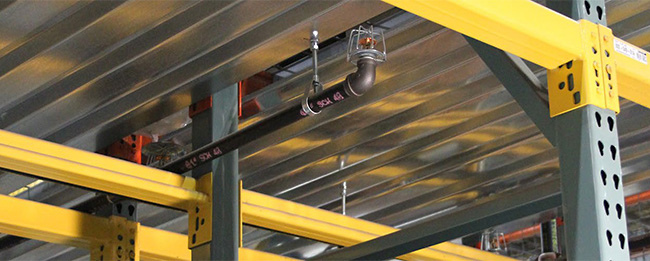
In-rack sprinklers are fire suppression devices installed within pallet racks. They are positioned at various levels of the rack to quickly and directly address fires within the storage system.
However, the frequent forklift activity typical of pallet rack systems can expose your fire suppression equipment to damage. Sprinkler heads and piping, which are located within storage bays, are especially vulnerable. Use these tips to protect your in-rack sprinkler system from damage and reduce the need for costly repairs.
Types of In-Rack Sprinkler Systems
Wet Pipe: A system where water is continuously present in the pipes, ready to discharge immediately upon activation. It is ideal for areas not exposed to freezing temperatures.
Dry Pipe: This system uses pressurized air or nitrogen in the pipes instead of water. Upon activation, the air or nitrogen is released first to allow water to flow into the pipes and then discharge. It is suited for areas prone to freezing.
Pre-Action: Combining features of both wet and dry systems, this system requires both a fire detection event and sprinkler activation to release water. This reduces the risk of accidental discharge and is ideal for high-value assets or sensitive environments.
Deluge: In this system, all sprinklers connected to the piping are open and will discharge water when triggered by a fire detection system. It is commonly used in high-hazard environments where rapid fire suppression is essential.
Foam-Water: This system mixes foam concentrate with the water supply to create a foam blanket upon discharge. It effectively suppresses fires involving flammable liquids or materials.
Tips to Safeguard In-Rack Sprinklers from Forklift Damage
Strategic Positioning: Positioning sprinkler heads behind structural elements of the rack, like uprights, creates a physical barrier that reduces the risk of accidental forklift strikes. Running the piping network behind the horizontal beams also protects the pipes from damage.
Sprinkler Head Cages: Install steel cages around sprinkler heads to guard against minor bumps and interference. These cages not only provide protection but also make the sprinklers more visible to forklift operators. Painting the cages a bright color enhances their visibility.
Sprinkler Head Guards: Steel guards offer robust protection for sprinkler heads and piping. They act as a sturdy barrier against impacts, helping to prevent damage while keeping the sprinkler heads visible for effective water discharge in case of fire.
Proper Training: Provide forklift operators with thorough training on safe driving practices, including awareness of in-rack sprinkler locations and the importance of avoiding collisions with them.
Regular Inspections: Establish a routine inspection schedule to identify any damage or obstruction to in-rack sprinklers caused by forklifts. Promptly repair or replace any damaged sprinklers to maintain their functionality.
Although the initial cost of added protection, such as cages and guards, may increase the system’s expense, these measures can ultimately save money by preventing costly damage to sprinkler systems and reducing potential downtime during repairs.
Fire Baffles or In-Rack Sprinklers?
Depending on the rack design and the combustibility of the stored materials, you might consider installing fire baffles in addition to or as an alternative to in-rack sprinklers. Steel fire baffles create barriers that trap heat, activate sprinklers, and help contain fires, effectively reducing inventory loss and limiting fire spread. They are easy to install both vertically and horizontally if needed and comply with local fire codes.
NFPA requires in-rack sprinklers for systems deeper than 20 feet or higher than 25 feet. However, fire baffles can be a cost-effective alternative if the following criteria are met:
- Maintain a 6-inch transverse flue space every 5 feet
- Limit rack depth to 20 feet
- Ensure a 3-foot 6-inch longitudinal flue space every 20 feet for rack separation
- Install a vertical barrier every 20 feet behind the rack
FAQ’s
Why are in-rack sprinklers important for warehouse safety?
They provide targeted fire suppression within racks, minimizing property damage, protecting workers, and reducing disruptions.
Can fire baffles be used instead of in-rack sprinklers?
Yes, fire baffles can be a cost-effective alternative if certain conditions are met, such as maintaining proper flue spaces and rack separation.
What are the NFPA requirements for in-rack sprinklers?
NFPA mandates in-rack sprinklers for systems deeper than 20 feet or higher than 25 feet. Fire baffles can be used if specific criteria are met, including proper flue spaces and vertical barriers.
Conclusion
Protecting your warehouse from fire is essential for safeguarding your assets and ensuring the safety of your team. Implementing in-rack sprinklers or fire baffles can significantly enhance fire safety by addressing potential hazards within the storage system. While each type of sprinkler system has its advantages, adding protective measures like cages, guards, and proper training can further reduce the risk of damage from forklift activity. Regular inspections and adherence to NFPA guidelines will help maintain a reliable fire suppression system, ultimately saving costs and preventing costly downtime.