
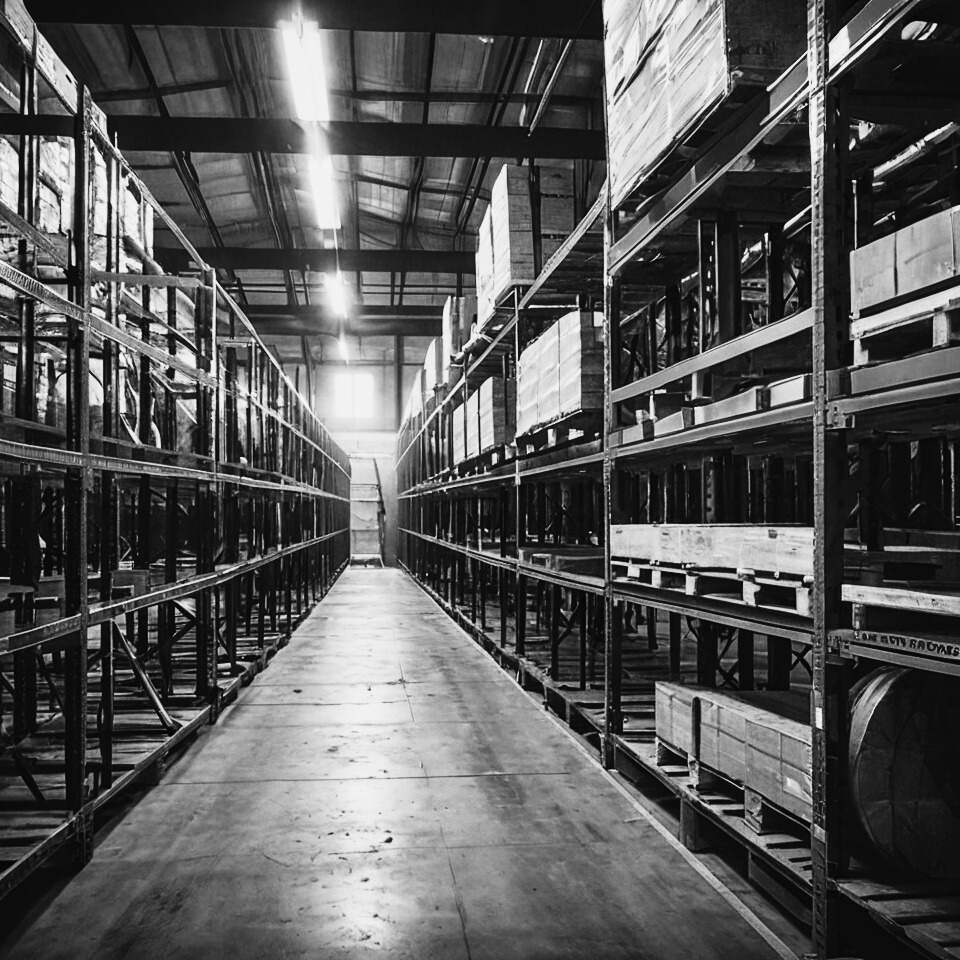
Pallet racks are essential for warehouses. Without the ability to stack pallets in columns, warehouses would need to be significantly larger. Fortunately, these robust shelving units enable forklifts to stack pallets on top of each other, effectively increasing storage capacity two or three times over.
However, pallet racking systems were not always a standard feature in warehouses. In fact, before World War I, pallet racking was not widely used. Here’s a look at how the modern pallet racking system came to be.
The Use of Packaging and Pallets
In the early 1900s, companies started looking more efficient, affordable, and convenient methods for packaging their products. At the time, most goods were transported by truck and railway, and even those shipped overseas by boat required more cost-effective and practical containers. The answer came in the form of corrugated packaging. These cardboard boxes were inexpensive to produce, easy to pack, and disposable after use.
The downside, however, was that each box had to be handled individually. Additionally, if the items inside were heavy, the box could not be very large. As a result, while the packaging itself was cheap, the labor involved remained costly.
The Invention of the Forklift
Forklifts gained popularity in 1915. While various companies had been developing different versions of the forklift, Clark, a transmission manufacturer, and Yale & Towne Manufacturing, a hoist manufacturer, created what were likely the most effective models. In the context of warehousing and pallet racks, the forklift became a crucial component that made the whole system function.
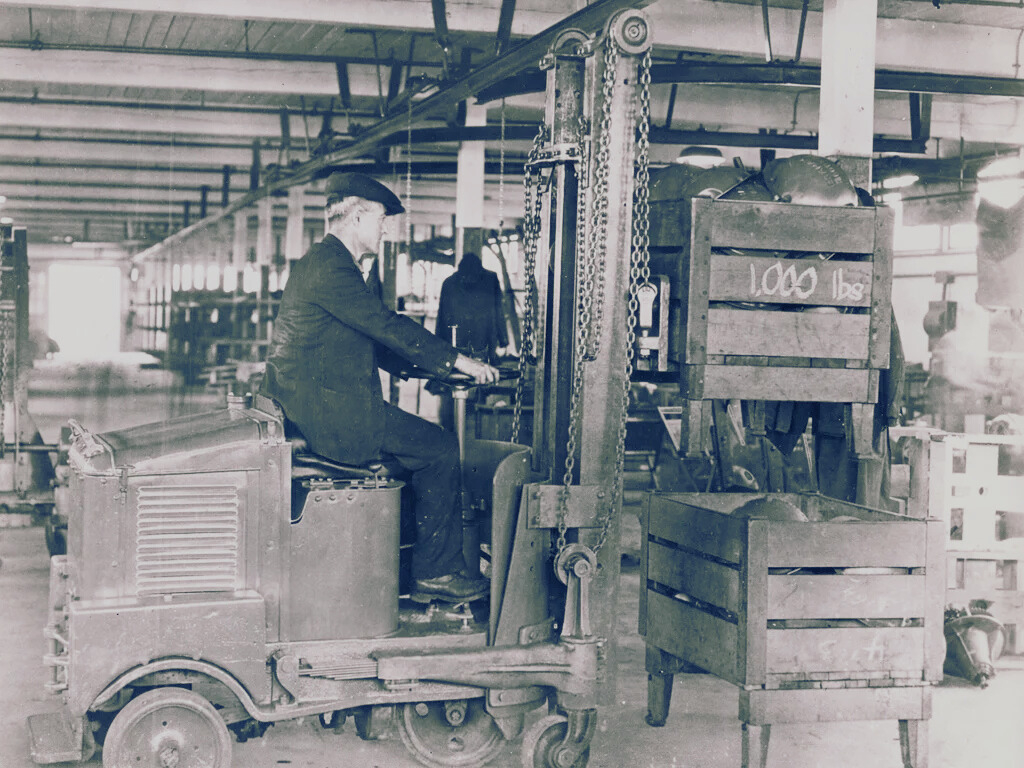
With a forklift, entire pallets of boxes could be moved, regardless of the weight of individual items. This significantly sped up loading and unloading processes. Rather than workers manually carrying each box onto a truck or ship, forklifts could quickly and efficiently transport entire pallets. As technology advanced, forklifts were modified to lift pallets several meters high, leading to the creation of the pallet rack system.
Vertical Storage Systems
In the late 1920s, the first vertical pallet storage systems were introduced, allowing warehouses to expand upwards instead of outwards, which proved to be more cost-effective. This shift also changed the design of warehouses. Rather than being low and wide, buildings were constructed taller, enabling pallets to be stacked two, three, or even four high. Naturally, the foundations of these warehouses had to be reinforced to support the added weight.
Initially, pallet racks could only hold a single layer of pallets, but as manufacturers developed more systems, they found ways to distribute the weight, making multi-level pallet racks possible. Crossbeams helped bear the weight of the pallets, while square, plumb bases ensured the racks were stable and wouldn’t tip over. Strong anchor bolts were also introduced to secure the racks in place.
Drive-in and drive-through rack systems were created to maximize storage density by allowing forklifts to drive directly into the rack structure. Drive-in racks feature a single entry point, while drive-through racks have entry points on both ends, offering better accessibility.
Later innovations, such as pallet flow racks and push-back racks, were developed to further enhance storage density and improve inventory rotation. Pallet flow racks use gravity to move pallets along rollers, while push-back racks store pallets on nested carts, supporting Last-In-First-Out (LIFO) inventory management.
Today, pallet racks are not only essential but have become an entire industry. With the rise in shipping, the demand for pallets and pallet racks has grown accordingly. Billions of dollars are spent annually on warehousing, with a significant portion allocated to pallet racks and shelving systems.
FAQ’s
Why are pallet racks essential for warehouses?
Pallet racks are crucial for maximizing storage capacity in warehouses. They allow forklifts to stack pallets on top of each other, effectively increasing storage space two or three times over, without the need for significantly larger buildings.
When did pallet racking systems become common in warehouses?
Pallet racking systems were not widely used before World War I. It wasn’t until the rise of forklifts and the development of vertical storage systems in the 1920s that pallet racks became a standard feature in warehouses.
What were the challenges with packaging before the invention of pallet racks?
Before pallet racks, packaging was done using corrugated cardboard boxes, which were cheap and easy to make. However, the major challenge was that each box had to be handled individually, which could be time-consuming and labor-intensive, especially when the items inside were heavy.
What role did forklifts play in the development of pallet racks?
Forklifts, which gained popularity in 1915, became a key component in the pallet racking system. They enabled workers to move entire pallets of boxes efficiently, which drastically reduced loading and unloading times. Additionally, forklifts were eventually modified to lift pallets several meters high, paving the way for multi-level pallet racks.
How did the introduction of vertical pallet storage systems impact warehouses?
The introduction of vertical pallet storage systems in the late 1920s allowed warehouses to expand upwards instead of outwards. This change was more cost-effective, enabling warehouses to store pallets two, three, or even four high, without requiring significantly larger buildings. The foundation of warehouses also had to be reinforced to support the added weight of stacked pallets.
What are the differences between drive-in and drive-through rack systems?
Drive-in rack systems have a single entry point, while drive-through racks feature entry points at both ends, making them more accessible. Both systems allow forklifts to drive directly into the rack structure, maximizing storage density.
What is the advantage of pallet flow racks and push-back racks?
Pallet flow racks use gravity to move pallets along rollers, facilitating efficient inventory rotation. Push-back racks allow pallets to be stored on nested carts, supporting Last-In-First-Out (LIFO) inventory management. Both innovations were designed to enhance storage density and improve the efficiency of warehouse operations.
How has the demand for pallet racks changed over time?
As shipping and warehousing have grown, the demand for pallet racks has increased significantly. Today, pallet racks are an essential part of warehousing systems and have become an industry in their own right, with billions of dollars spent annually on pallet racks and shelving systems.
Conclusion
Pallet racks have transformed warehousing by maximizing storage space and improving efficiency. From their origins in the early 1900s, driven by the need for better packaging and transportation, to the development of advanced systems like drive-in and pallet flow racks, these solutions have evolved to meet growing demand. Today, pallet racks are essential for modern warehouses, helping businesses optimize storage, manage inventory, and streamline operations. As the warehousing industry expands, their role will only continue to grow.