A pallet rack column that leans (out-of-plumb) or bows (out-of-straight) beyond a certain point will experience a significant reduction in capacity, becoming unsafe and at risk of collapsing.
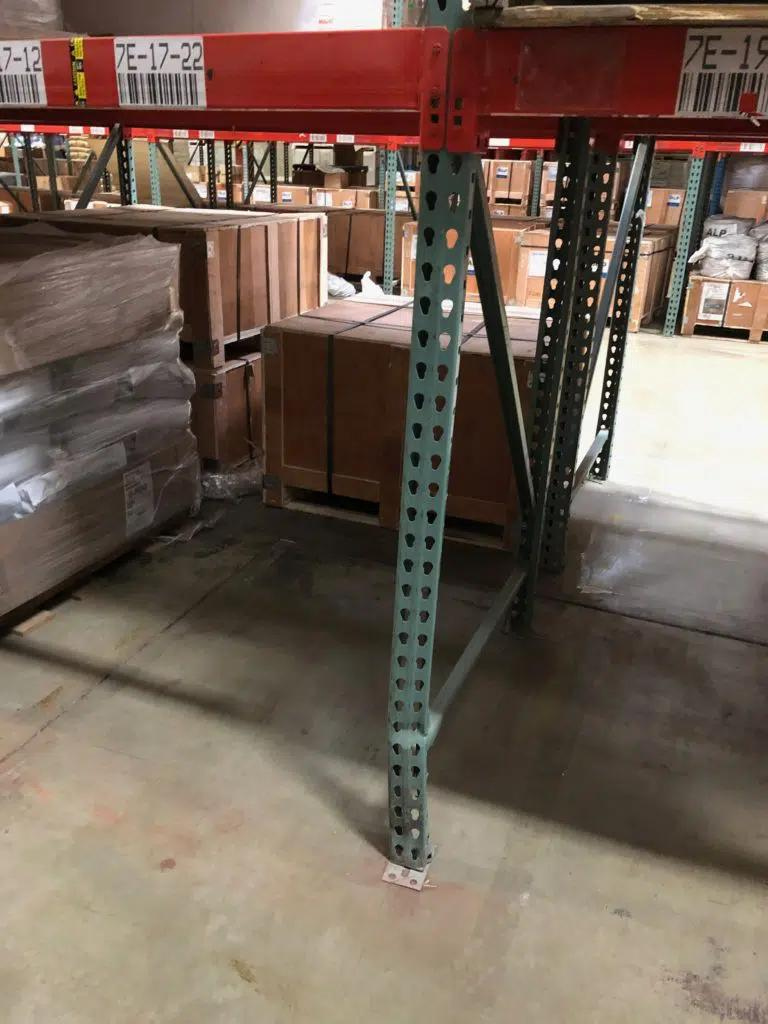
RMI defines the severity of these conditions as follows:
Out-of-Plumb Ratio
This is the maximum horizontal distance (in inches or millimeters) from the centerline of the column at the floor to a plumb line extending downward from the centerline of the column at the top shelf elevation, divided by the vertical distance (in feet or meters) from the floor to the top shelf elevation.
📚 Also Read:
How To Choose The Right Frames and Beams of Pallet Rack
Out-of-Straight Ratio
This is the maximum horizontal distance (in inches or millimeters) from the centerline at any point on the column to a plumb line from any other point on the column, divided by the vertical distance (in feet or meters) between the two points. A higher ratio indicates a greater likelihood of rack failure. Recognizing this, MHI’s ANSI MH16.1-2012: Specification for the Design, Testing, and Utilization of Industrial Steel Storage Racks section 1.4.11 limits the ratio for both out-of-plumb (leaning) and out-of-straight (bowing) loaded rack columns to 1/240. This corresponds to 0.05 inches per 1 foot of height (1.25 millimeters per 0.3 meters), or 0.5 inches per 10 feet (12.5 millimeters per 3 meters) of height.
These limits aim to prevent excessive bows or dogleg conditions in rack columns. For example, a column might be plumb from top to bottom but have an excessive bow (out-of-straight) in the middle. Alternatively, a 20-foot-tall column could be out-of-plumb by 1 inch from top to bottom, which would be acceptable unless the entire out-of-plumb condition exists solely between the floor and the 5-foot level, known as a dogleg (commonly caused by a fork truck impact).
Other causes of out-of-plumb and out-of-straight conditions include adjustments or alterations in beam height, the type of connection used, bolts that weren’t sufficiently tightened during installation, or impacts with machinery or pallets during loading and unloading.
Regular inspection of the racking using tools such as a plumb bob, long level, or laser line is recommended to ensure a safe installation. If leaning or bowing columns are identified, corrective action involves unloading the rack, loosening the column bolts to straighten them, and then re-tightening the bolts. Additionally, beam connectors should be inspected to ensure they have not been affected by any leaning.
FAQ’s
What are the risks associated with a pallet rack column that leans or bows?
Leaning or bowing beyond a certain point significantly reduces the column’s capacity, making it unsafe and at risk of collapsing.
How does RMI define the severity of these conditions?
RMI measures the severity using the Out-of-Plumb Ratio and the Out-of-Straight Ratio, which calculate the deviation from the vertical centerline of the column.
What is the Out-of-Plumb Ratio?
It measures the maximum horizontal distance from the centerline of the column at the floor to a plumb line at the top shelf elevation, divided by the vertical distance from the floor to the top shelf.
And what about the Out-of-Straight Ratio?
This ratio calculates the maximum horizontal distance from the centerline at any point on the column to a plumb line from any other point on the column, divided by the vertical distance between those two points.
What are some common causes of out-of-plumb and out-of-straight conditions?
These conditions can be caused by adjustments in beam height, the type of connections used, insufficiently tightened bolts during installation, or impacts from machinery or pallets during loading and unloading.
How can I ensure the safety of my rack installation?
Regular inspection using tools like a plumb bob, long level, or laser line is recommended. If leaning or bowing columns are identified, corrective action involves unloading the rack, straightening the columns, and inspecting beam connectors for any damage.
Conclusion
It’s crucial to maintain the structural integrity of pallet rack columns to ensure workplace safety. Adhering to standards outlined by RMI and MHI’s ANSI MH16.1-2012, conducting regular inspections, and promptly addressing any issues are essential practices. By prioritizing these measures, businesses can create a safer environment for workers and protect valuable inventory and equipment stored on industrial racks.