
Pallet Rack
Upright Damage:
Identify, Repair
& Replace
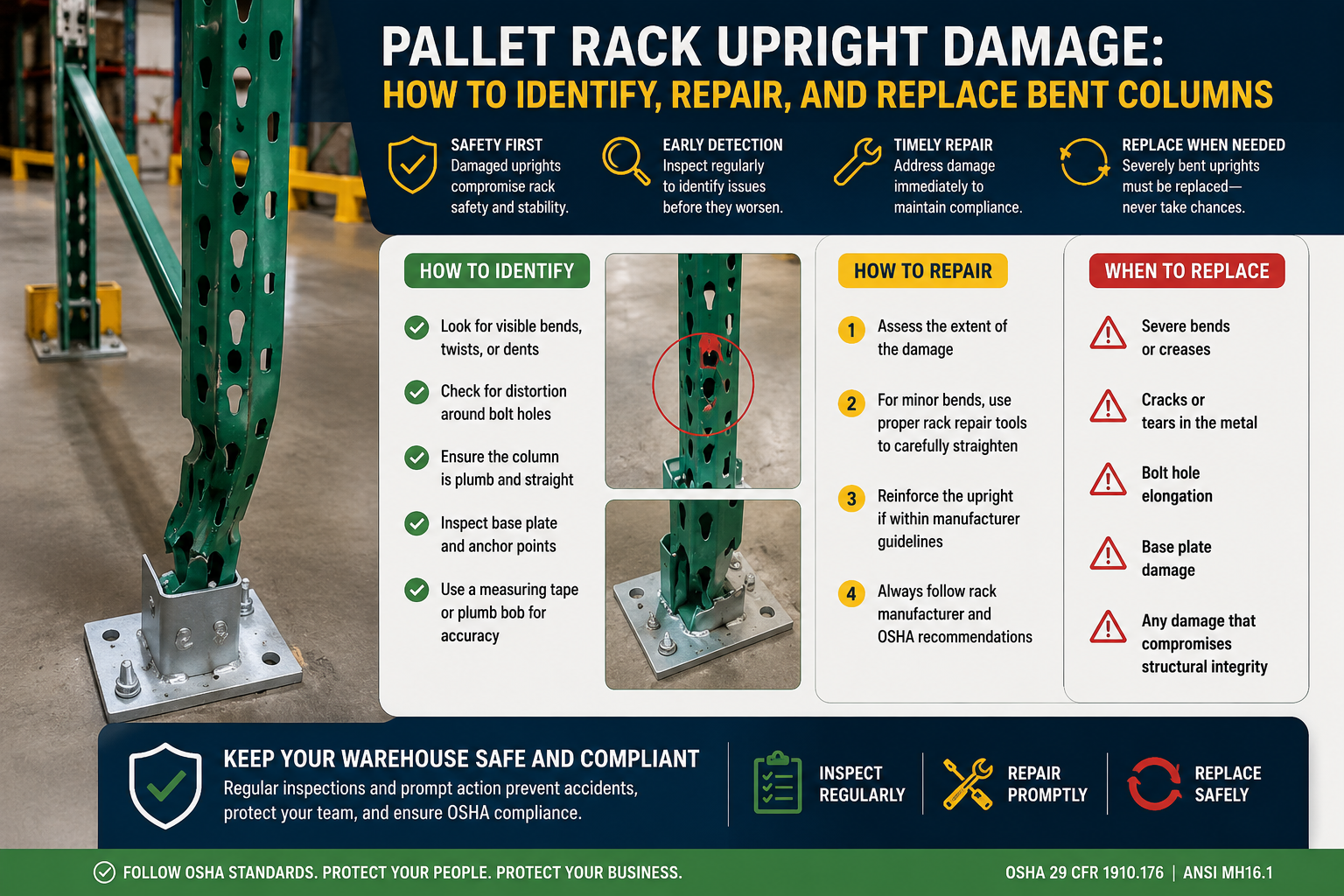
Forklift clips a rack base. Nobody reports it. The column quietly sits there — loaded — its capacity reduced by an unknown amount. This guide tells you exactly what to look for, when to repair, when to replace, and how to document everything for OSHA compliance.
Visual inspection alone is not sufficient after an impact event.
What Pallet Rack Upright
Damage Actually Looks Like
Damage exists on a spectrum — from nearly invisible surface marks that pose no structural threat to catastrophic column failure. Knowing where on that spectrum a given piece of damage falls requires understanding what you're looking at.
See Immediately
Damage Severity Classification:
What Each Level Means
Use this framework during every rack inspection to classify damage consistently and determine the appropriate response. Every classification must be documented with a photograph, date, and inspector name.
Damage
Concern
Failure
Condition
Repair vs. Replace:
Making the Right Call
The financial temptation is always to repair — it's faster and cheaper in the short term. But a repair kit applied to a column that actually needs replacement creates a false sense of security that is genuinely dangerous.
How to Use a Pallet Rack Upright
Repair Kit: Step-by-Step
When a repair kit is the appropriate solution — minor dent, column structurally straight, manufacturer-approved kit available for your rack brand — follow this process precisely. There are no shortcuts in structural repair.
Choosing the Right Repair Kit:
4 Mandatory Match Criteria
Not all repair kits are interchangeable. A kit designed for a 3-inch × 1-5/8-inch teardrop upright cannot be used on a 3-inch × 3-inch structural column. You must confirm all four criteria before installation — if any are unknown, contact your racking supplier before proceeding.
When You Need Full Upright
Replacement: What to Expect
Full upright replacement is more involved than installing a repair kit, but it is a straightforward process when planned properly. In a live warehouse environment with proper staging, a single upright replacement typically takes 1–5 business days from order to certified reinstallation.
Repair & Replacement Costs:
The Real Numbers
The most common reason managers delay addressing upright damage is cost uncertainty. Here's a realistic breakdown of US market costs — and the liability numbers that put them in context.
Preventing Upright Damage:
Protecting Your Investment
Every upright that gets hit costs money, downtime, and risk. A prevention program costs a fraction of repeated repair cycles. Here's where to focus your effort for the highest return.
End-of-aisle rack guards and safety barriers protect the most vulnerable positions: corner uprights at the opening of each rack row that face direct exposure to forklift turns.
Add convex safety mirrors at blind corners and rack row intersections where forklift sightlines are limited by the rack structure itself.
Build a simple, blame-free impact reporting process: fill out a card or digital form, section gets tagged, supervisor notified, inspection happens within the shift.
Patterns of repeated damage in the same location signal a layout or process problem that needs addressing at the source — not just a series of individual repair events.
OSHA & ANSI Compliance:
What the Standards Require
Two regulatory frameworks govern how US warehouses must respond to rack upright damage. Compliance isn't just about avoiding fines — a damaged upright collapse triggers a mandatory OSHA investigation of your entire facility.
Frequently Asked
Questions
Answers to the most common questions about pallet rack upright damage — optimized for fast, clear guidance when you need it most.