Pallet Storage Solutions

New vs. Used Pallet Racks: Which Is the Right Investment for Your Warehouse in 2026? | Pallet Storage Solutions
Buyer's Guide Updated ยท 2026

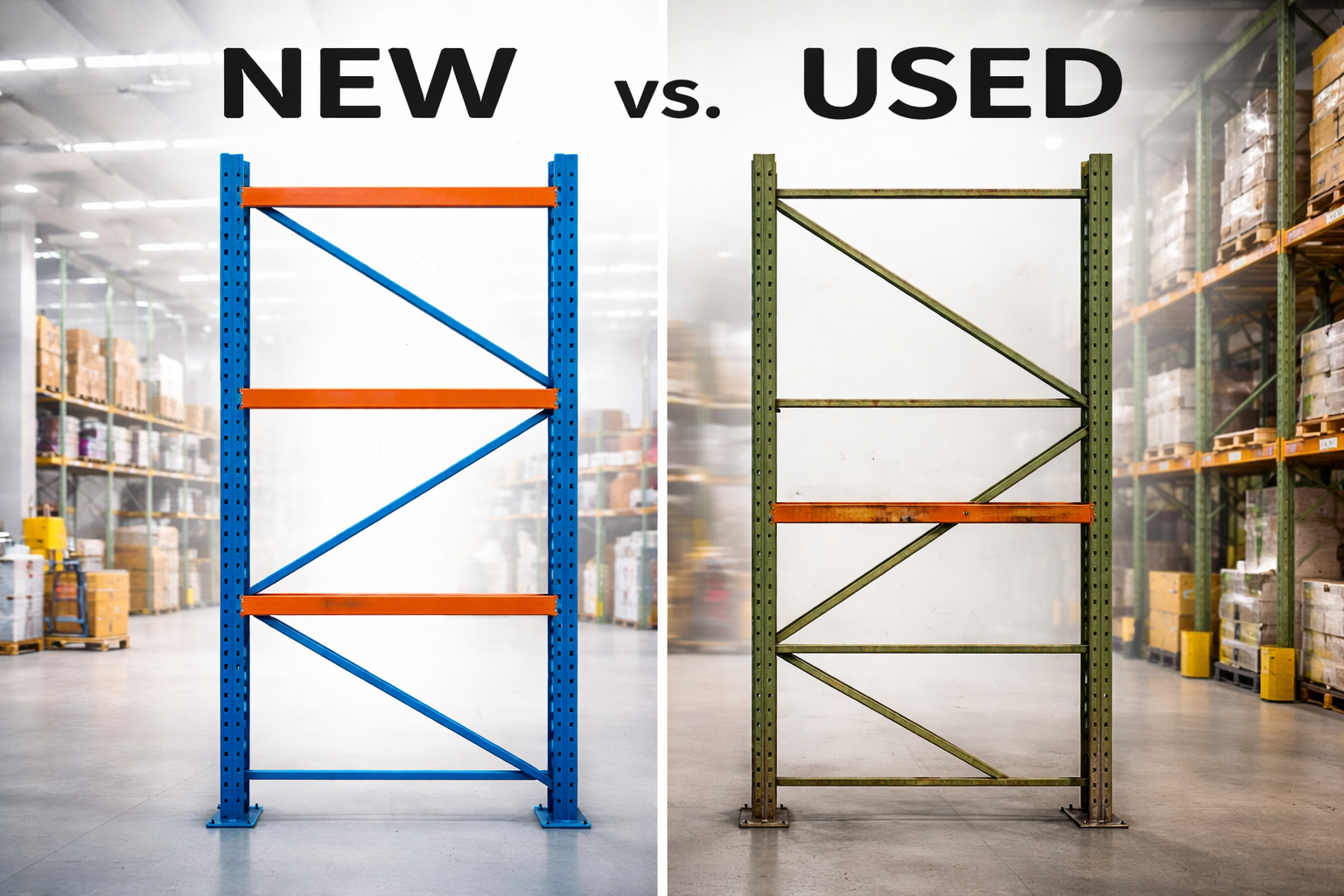
New vs. Used
Pallet Racks

Which is the right investment for your warehouse? Real cost breakdowns, safety red flags, inspection checklists, and a clear decision framework โ€” so you can buy with confidence.

โšก At a Glance
๐Ÿ—
New Racks
Full Price
๐Ÿ”„
Used Racks
30โ€“50% Less
๐Ÿ›ก
Warranty
New Only
โฑ
Lead Time
Used = Faster
Pallet Racking System - Warehouse Storage๏ธ
Introduction

The Question Every
Warehouse Manager Faces

"Both options can work well โ€” but they're not interchangeable decisions."

Every warehouse manager eventually faces it: you need more storage capacity, and you need it without breaking the budget. The question isn't really whether you need pallet racking โ€” it's whether to buy new or go with used equipment.


Both options are widely available across the US market. But choosing the wrong option for your operation can mean paying more than you need to, installing unsafe equipment, or locking yourself into a system that doesn't scale.


This guide breaks down the real differences between new and used pallet racks โ€” cost, safety, compatibility, longevity, and the scenarios where each makes the most sense โ€” so you can make a confident, informed decision for your warehouse.

Used Rack Savings
30โ€“50%
Less than comparable new equipment โ€” but sticker price is only part of the full story.
Real Example
New system cost$40,000
Used purchase price$20Kโ€“$28K
Inspection + repairs+$2Kโ€“$6K
True all-in used cost$22Kโ€“$34K
Section 01

The Real Cost
Difference

Used pallet racks typically sell for 30โ€“50% less than comparable new equipment. For a growing small business or a warehouse in a temporary location, that savings can be significant.


But sticker price is only part of the story. New racks arrive pre-engineered with full documentation, load placards, and a warranty. Used racks may require inspection, cleaning, component replacement, and custom load engineering before they're safe to use at full capacity.


๐Ÿ” True Cost Comparison: What Most Buyers Miss
๐Ÿ”ฌ
Inspection & testing fees โ€” professional rack inspection runs $300โ€“$1,000+ depending on system size.
๐Ÿ”ง
Component replacement โ€” damaged beams, safety pins, or uprights discovered during inspection must be replaced before use.
๐Ÿ“
Load engineering fees โ€” if no documentation exists, a structural engineer must certify load ratings before the system can be used.
โš ๏ธ
OSHA compliance costs โ€” racks that don't meet current standards require remediation before they can be safely operated.
๐Ÿ’ก Always budget an additional 15โ€“25% above the purchase price when sourcing used equipment to cover these often-overlooked costs.
Section 02

New vs. Used: Side-by-Side
Comparison

Every major purchasing factor, laid out clearly so you can evaluate what matters most for your specific operation.

Factor ๐Ÿ— New Pallet Racks ๐Ÿ”„ Used Pallet Racks
Upfront Cost
Higher โ€” full retail price 30โ€“50% less than new Savings
Lead Time
1โ€“4 weeks (custom: longer) Often available immediately Faster
Condition
Perfect โ€” no wear, no damage Varies โ€” inspect carefully Risk
Load Certification
Full manufacturer specs included May lack documentation Verify
Compatibility
Uniform โ€” consistent brand/style Risk of mixed brands/styles Risk
Expected Lifespan
15โ€“25+ years with proper care Remaining life unknown
Customization
Built to your exact spec Limited to what's available
Warranty
Full manufacturer warranty No warranty โ€” as-is only
OSHA Compliance
Meets current standards out of box Must be inspected & verified Action Required
Best For
Long-term ops, new facilities, heavy loads Budget builds, temp storage, fast expansion
Section 03

When Buying New
Makes Sense

New racking is the right investment in several key situations. If any of the following describe your operation, new racks are likely the better long-term choice.

01
๐Ÿญ
Permanent or Long-Term Facility
If this warehouse is where your business operates for 10โ€“20 years, new racks pay for themselves in durability and fewer replacements. Expect 25+ year operational lifespan.
02
โš–๏ธ
Heavy or High-Value Inventory
Industrial parts, automotive components, bulk food โ€” the engineering certainty of new racks is non-negotiable for high-weight applications. Known specs mean known safety.
03
๐Ÿ“
Specific Configuration Needed
Non-standard ceiling heights, unusual pallet dimensions, or specific accessory placement? New racks can be built to your exact specifications โ€” used racks are whatever was available.
04
๐Ÿ›ก
OSHA Compliance Required
In pharma, food distribution, or hazmat storage, certified ANSI MH16.1-compliant documentation from day one is often a regulatory requirement โ€” not just a preference.
Section 04

When Buying Used
Makes Sense

Used racks get an unfair reputation. In the right circumstances, they're an excellent, practical choice โ€” here's when the math and logistics genuinely favor going used.

โšก
You Need Storage Fast
New racks from US manufacturers often have lead times of 2โ€“6 weeks or more. Quality used racks are frequently available for immediate pickup or delivery. If you've just landed a major contract and need 200 pallet positions operational within a week, used equipment can be the only viable path.
๐Ÿ”—
Expanding an Existing System
If you already have a teardrop-style or keystone-style rack system from a specific manufacturer, purchasing compatible used beams and uprights of the same brand can be a cost-effective way to add pallet positions. This only works when compatibility is confirmed โ€” mismatched components are a safety hazard.
๐Ÿ“…
Your Storage Needs Are Temporary
Seasonal overflow storage, short-term warehouse leases, or staging areas for distribution events don't justify the cost of brand-new equipment. Used racks serve these purposes well โ€” and they retain resale value reasonably well when the need passes.
๐Ÿ’ฐ
Your Budget Is Genuinely Limited
For a startup warehouse, a small business in early growth stages, or a nonprofit distribution operation, used racks can put functional storage in place at a price that makes the business model work. Done carefully โ€” with proper inspection โ€” a well-sourced used racking system is a legitimate, safe solution.
Section 05

How to Inspect Used Pallet
Racks Before You Buy

What to Check โœ… Acceptable ๐Ÿšฉ Red Flag โ€” Walk Away
Upright columns Straight, no visible bending Bowed, kinked, or twisted steel
Welds & connections Clean welds, no cracks Cracked welds, open seams
Beam connectors (clips/locks) All present, locking properly Missing, bent, or broken clips
Surface rust Light surface rust only Deep rust, pitting, flaking
Load placard Present and legible Missing โ€” capacity unknown
Bolt holes at base Intact, anchor-ready Elongated or damaged holes
Brand/style consistency All same brand/series Mixed brands, unknown compatibility
Wire decks (if included) Flat, no broken wires Sagging, bent frames, missing wires
โš  Critical Warnings
๐Ÿšจ
A rack system with compromised uprights is not a bargain at any price โ€” it's a liability. Any red flag item is reason to negotiate a significant price reduction or walk away entirely.
โ†’
Never buy used racks sight-unseen from an online listing without a physical inspection by a qualified professional.
โ†’
If you can't inspect in person, hire a certified rack inspection professional to evaluate on your behalf before any money changes hands.
โ†’
Ask for the original load placard and manufacturer documentation. If the seller can't provide it, budget for professional load re-engineering.
โ†’
Use our Pallet Rack Testing service to get professional inspection before committing to any used system.
Section 06 ยท Critical Warning
The Compatibility
Problem
One of the most common and dangerous mistakes US warehouse operators make when buying used racks is mixing components from different manufacturers โ€” or from the same manufacturer's incompatible product lines.

A teardrop upright from Brand A may physically accept a beam from Brand B. The connector clips in. It looks fine. But the engineering load ratings are different, the steel gauges may differ, and there is no manufacturer certification covering that combination. If that beam fails under load, you have no documentation, no warranty coverage, and serious liability exposure.
The Rule Is Simple
If you're buying used racks, buy a complete, consistent system from one manufacturer and one product line. If adding to an existing system, match the brand, product series, and beam connector style exactly.
โšก
Physical fit โ‰  engineering compatibility. Clips snapping together doesn't mean the load ratings match.
๐Ÿ“‹
No manufacturer certification = no liability protection. If a mixed system fails, you bear all risk.
๐Ÿ”
When in doubt, have a professional racking specialist verify compatibility before installation.
Section 07

Financing New Racks:
Closing the Cost Gap

Smart Alternative to Used
Spread the
Cost. Get
the Warranty.
Instead of a large upfront capital outlay, spread the cost over 12, 24, or 36 months. When you compare monthly payments on financed new racks against the all-in cost of used racks (purchase + inspection + repairs + compliance work), the actual cash flow difference narrows significantly โ€” and you get full manufacturer warranty, documented load ratings, and equipment that will likely outlast the financing term by a decade or more.
Explore Financing Options โ†’
What Financing Gives You
๐Ÿ“…
Flexible Terms
12, 24, or 36-month payment plans available through Pallet Storage Solutions
๐Ÿ›ก
Full Manufacturer Warranty
New racks come with complete warranty coverage โ€” used racks are always sold as-is
๐Ÿ“‹
Complete Documentation
Certified load ratings, ANSI MH16.1 compliance, and load placards included from day one
๐Ÿ“ˆ
25+ Year Equipment Lifespan
New racks typically outlast financing terms by 10โ€“15 years, maximizing long-term ROI
๐Ÿ’ก
True Cost Comparison
Ask your supplier for a monthly payment quote before committing to used equipment โ€” it may change your calculation entirely
Section 08

What About Refurbished
Pallet Racks?

There's a middle ground worth considering. Refurbished racks have been professionally inspected, repaired where necessary, and recertified by a qualified racking company.

Option A
New Racks
Typical cost
Full Retail
โœ…Complete manufacturer warranty
โœ…Full ANSI MH16.1 documentation
โœ…Built to exact specifications
โœ…25+ year expected lifespan
โฑLead time: 1โ€“6 weeks
๐Ÿ’ฐHighest upfront cost
Option B ยท Best Middle Ground
Refurbished
Typical cost
20โ€“35% Below New
โœ…Professionally inspected & repaired
โœ…Recertified load documentation
โœ…Damaged uprights replaced
โœ…Surface rust treated
โš ๏ธVerify inspection report before buying
๐Ÿ’ฐMid-range cost with peace of mind
Option C
Used Racks
Typical cost
30โ€“50% Below New
โœ…Lowest upfront price
โœ…Often immediately available
โš ๏ธCondition varies โ€” inspect required
โŒNo warranty โ€” sold as-is
โŒDocumentation may be missing
โŒUnknown remaining service life
Important: Not all suppliers offer true refurbishment with engineering documentation. If a seller claims racks are 'refurbished' but can't provide a professional inspection report and updated load capacity documentation โ€” treat them as used, not refurbished.
Section 09

Making the Final Decision:
A Simple Framework

If you're still weighing both options, run through these six steps in order. They'll clarify which option is genuinely right for your operation โ€” not just which looks cheaper on paper.

1
Step 01
Determine Your Timeline
If you need racks operational in under two weeks, used or refurbished is likely your only option. If you have 4+ weeks, new is viable. Don't let urgency force you into a used purchase that needs three weeks of inspection anyway.
2
Step 02
Define Load Requirements
Heavy, specialized, or safety-critical loads should use new, certified equipment with full documentation. Unknown load history from a used system is not acceptable for high-weight industrial applications.
3
Step 03
Calculate True All-In Budget
Add 20% to any used rack quote for inspection, repairs, and compliance costs before comparing to new pricing. The raw sticker price comparison almost always understates what used equipment actually costs.
4
Step 04
Check Financing Options
Ask whether monthly payments on new racks change the effective cost comparison. For many buyers, financed new racks compare favorably to the all-in cost of used equipment once you factor in every hidden expense.
5
Step 05
Verify Compatibility First
If adding to an existing system, confirm brand and connector compatibility before committing to used equipment. Physical fit doesn't equal engineering compatibility โ€” get it verified by a specialist.
6
Step 06
Inspect Before You Buy
Never purchase used racks without a physical inspection by a qualified professional. A rack system with compromised uprights is not a bargain at any price โ€” it's a liability you're accepting in full.
Section 10

Frequently Asked
Questions

10
Common Questions Answered
Can't find what you're looking for? Our racking specialists are available to help you evaluate new, used, and refurbished options for your specific warehouse.
Ask a Specialist โ†’
Used pallet racks can be safe when properly inspected, but condition varies widely. Before using any used system, have a qualified racking professional inspect for bent uprights, cracked welds, missing safety pins, and load documentation. Never use racks with structural damage or unknown load histories.
Used pallet racks typically cost 30โ€“50% less than new. However, the true cost gap narrows when you add inspection fees, component replacements, and any load re-engineering required. Budget an additional 15โ€“25% above the purchase price when sourcing used equipment to cover these hidden costs.
Used pallet racks are available from warehouse liquidators, equipment resellers, local classified listings, and companies that specialize in both new and used racking โ€” like Pallet Storage Solutions. Always prefer suppliers who can document the rack's condition and provide inspection history over anonymous marketplace listings.
Mixing components from different manufacturers or product lines is a serious safety risk. Beam connectors may fit physically but carry different load ratings. Always use components from the same manufacturer and product series. When expanding a system with used parts, verify compatibility with your racking supplier before installation.
Used racks can meet OSHA standards, but they must be inspected and have visible load placards posted. If original documentation is missing, you may need a professional engineer to certify the load ratings before use. New racks come with full compliance documentation out of the box.
Look for bowed or twisted upright columns, cracked welds, bent beam connectors, missing safety pins, deep rust or pitting, and elongated bolt holes at the base. Any structural deformation in the upright is a disqualifying defect. When in doubt, hire a certified rack inspection professional to evaluate the system.
Refurbished racks โ€” professionally inspected, repaired, and recertified โ€” offer a middle ground between used and new. They typically cost 20โ€“35% below new pricing while providing verified load ratings and documentation. They're worth considering for buyers who need documented compliance but have tighter budget constraints.
Yes. Many US racking suppliers offer equipment financing with terms from 12 to 36 months. Monthly payments on financed new racks often compare favorably to the all-in cost of used equipment once you factor in inspection, repairs, and compliance work. Ask your supplier about financing options before committing to used equipment.
New pallet racks from reputable US manufacturers typically last 15โ€“25 years or more with proper maintenance. Used racks have an unknown remaining service life. Without documentation of the rack's age and load history, you're estimating when a used system will need replacement โ€” which makes long-term planning difficult.
Ask for the manufacturer name and product series, original load capacity documentation, age of the system, reason for sale, whether any uprights have been damaged or repaired, and if a professional inspection has been completed. A legitimate seller should be able to answer most of these without hesitation.
Scroll to Top