What are Wedge Anchors?
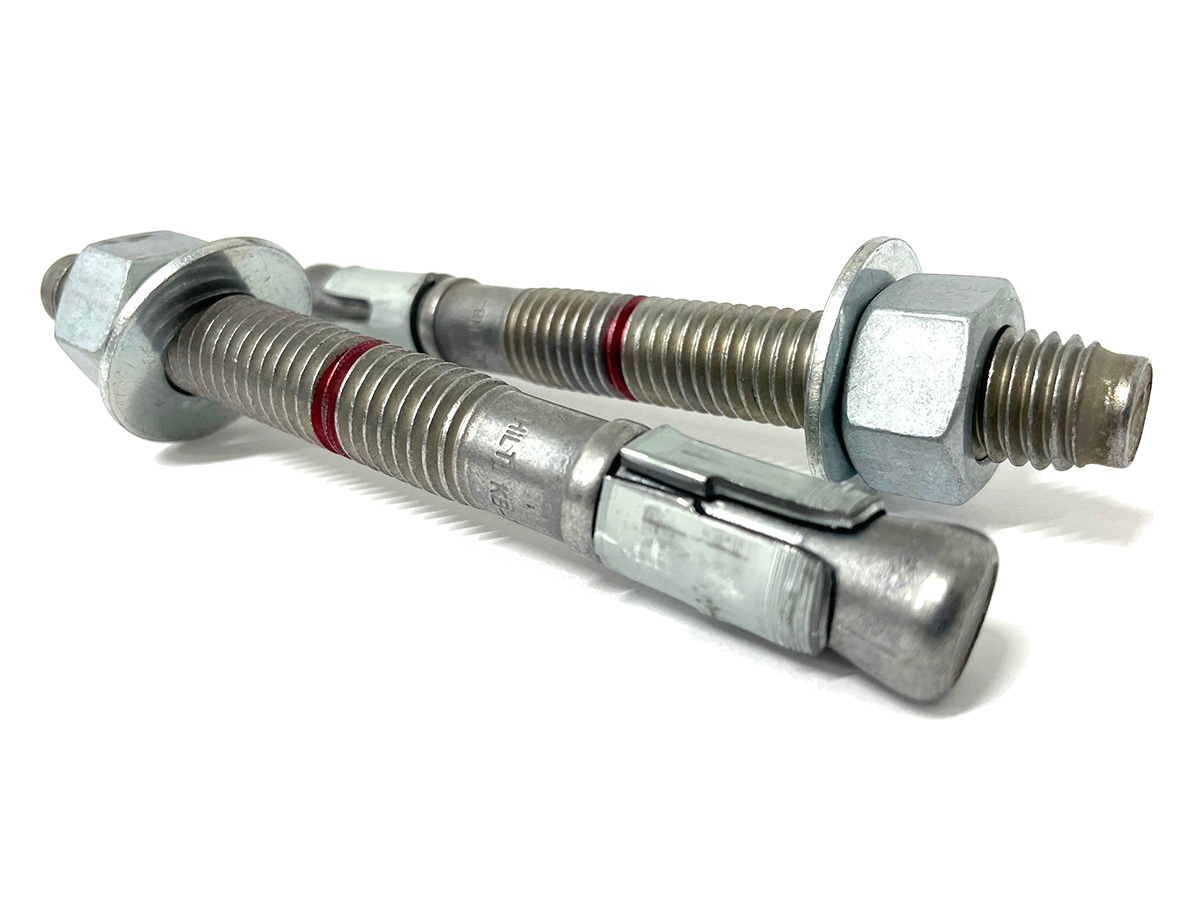
Wedge anchors are steel bolts designed to be inserted into pre-drilled holes to secure pallet racking frames (uprights) to concrete flooring. While they may initially appear similar to standard bolt-nut-washer sets, what distinguishes wedge anchors are their tapered ends. As the bolt is tightened into the concrete, its threads move upward through the nut, forcing the tapered end through a metal sleeve, also known as an expansion clip. This action expands the space the wedge anchor occupies inside the concrete, effectively anchoring it in place, similar to the function of a drywall anchor.
These anchors come in various lengths and diameters, with larger diameters corresponding to longer anchors and greater strength. It is crucial to seek guidance from a professional engineer to determine the appropriate size of wedge anchor needed for a specific racking system.
Common sizes of wedge anchors include:
- 1/4” x 2 1/4”
- 1/2” x 4-1/2”
- 3/8” x 3”
- 5/8” x 4-1/2”
When to use Wedge Anchors
Once the uprights and horizontal beams of the pallet racks are assembled and positioned correctly, they are ready for anchoring. A warehouse layout or a drawing plays a crucial role in ensuring the accurate installation of the pallet racking system.
Anchoring the frames marks one of the final steps in the installation process of a selective pallet racking project, as once anchored, the wedges cannot be removed from the concrete. If relocation of the racks is necessary, cutting the wedge anchors becomes imperative. This sequencing of anchoring after positioning the uprights and horizontals serves as a safeguard in case of any minor discrepancies in measurements.
Similar to any construction endeavor, meticulous planning and preparation beforehand yield long-term benefits. It is essential that you, or your pallet racking installation team, possess the necessary expertise and equipment to execute the task accurately, efficiently, and safely.
How to Anchor Pallet Racks to Concrete Flooring:
1. Ensure you have the following equipment:
- Level
- Shims
- Hammer Drill
- Concrete Drilling Bit
- Vacuum/shop-vac/wire brush (for cleaning the hole)
- Wedge Anchors
- Hammer
- Impact Driver with a properly sized socket for your anchors (a socket wrench could also work)
2. Level your Frames:
It’s common for warehouse concrete floors to lack perfect leveling. In such cases, shims (usually made of steel or plastic) can be used to attain a level position for your uprights. Failure to level your uprights can significantly compromise the integrity of your racking system.
Once you’ve ensured your frame is level, proceed to drilling.
📚 Also Read: Are You Making These Pallet Racking Mistakes? Here’s What You Need To Know
3. Drill Hole:
Typically, there are two to three holes on each base plate, but usually, only one anchor per vertical post is needed (resulting in two anchors per frame). In such instances, stagger the anchors to avoid using the same hole on each base plate of the frame.
In cases where two or more wedge anchors are necessary per base plate, especially for pallet racking carrying heavy loads or situated in seismic areas, consult your engineer or safety officer to determine the required number of anchors.
Drill through the baseplate hole of the upright using a drill bit matching the size of your wedge anchors. The depth of the hole should exceed the length of your wedge anchor (refer to the table below for minimum hole depth). However, it’s advisable to consult a professional engineer to ascertain the correct hole-depth required.
Once you’ve confirmed the correct hole-depth, set a depth gauge on your hammer drill or use the method of taping the bit.
The depth of the hole to drill will depend on the diameter of the wedge anchor.
| Wedge Anchor Diameter | Minimum Hole Depth* |
|---|---|
| 3/8” | 2” |
| 1/2” | 2-5/8” |
| 5/8” | 3-3/4” |
| 3/4” | 4” |
4. Clear Hole:
Clean the hole using a vacuum and/or wire brush. This clears debris from the hole, enabling better grip of the anchor to the concrete.
5. Insert Anchor:
Slide a washer onto the anchor and thread the nut until it is flush with the top of the bolt. Then, place the wedge anchor into the drilled hole. Using a hammer, drive it down until the nut makes contact with the base plate.
6. Tighten Nut:
Using an impact driver or socket wrench, tighten the nut. Ensure it is tightened securely without over-torquing it (refer to the torque value chart below). As you tighten the nut, you’ll notice the anchor pulling upwards.
| Wedge Anchor Diameter | Torque Value (ft-lb) |
|---|---|
| 3/8” | 25 |
| 1/2” | 40 |
| 5/8” | 60 |
| 3/4” | 110 |
Importance of Anchoring your Pallet Racks
Anchoring pallet rack storage systems to the floor is essential to guarantee maximum stability and security. Proper installation ensures that these systems can withstand unforeseen forces such as earthquakes and common accidents involving forklifts. By anchoring your pallet racking, you ensure that even during such inevitable events, the rack remains secure. Without proper anchoring, upright frames shifting after incidents like forklift accidents could lead to system collapse. However, with proper anchoring, while a forklift accident may still cause damage, it is less likely to result in a catastrophic failure of the entire system.
FAQ’s
What are Wedge Anchors?
Wedge anchors are steel bolts specifically designed to secure pallet racking frames (uprights) to concrete flooring by being inserted into pre-drilled holes. They feature tapered ends that, when tightened into concrete, expand through a metal sleeve, anchoring the bolt firmly in place.
When should Wedge Anchors be used?
Wedge anchors are used after uprights and horizontal beams of pallet racks are assembled and positioned correctly. Anchoring is crucial for stability and safety, especially in warehouses prone to seismic activity or accidents involving forklifts.
How do I anchor pallet racks to concrete flooring?
To anchor pallet racks, ensure you have necessary equipment like a level, shims, hammer drill, concrete drilling bit, vacuum or wire brush for cleaning, wedge anchors, hammer, and impact driver. After leveling frames and drilling holes according to specifications, insert the anchors, and tighten the nuts securely.
Why is anchoring pallet racks important?
Anchoring pallet racks ensures maximum stability and security, enabling them to withstand unexpected forces like earthquakes and forklift accidents. Proper anchoring prevents potential system collapses caused by shifts in upright frames, minimizing the risk of catastrophic failures.
How do I determine the number of Wedge Anchors needed for my pallet racking system?
The number of wedge anchors required depends on factors such as load capacity and seismic activity in the area. Consultation with a professional engineer or safety officer is recommended to determine the appropriate number and placement of anchors for your specific pallet racking system.
Conclusion
Anchoring pallet rack storage systems with wedge anchors is crucial for warehouse safety and stability. By securely fastening frames to concrete flooring, businesses mitigate the risk of system failure during earthquakes or forklift accidents. Consulting professionals for proper installation ensures workplace safety and protects valuable inventory. Ultimately, investing in pallet rack anchoring ensures long-term safety and peace of mind for warehouse operations.