
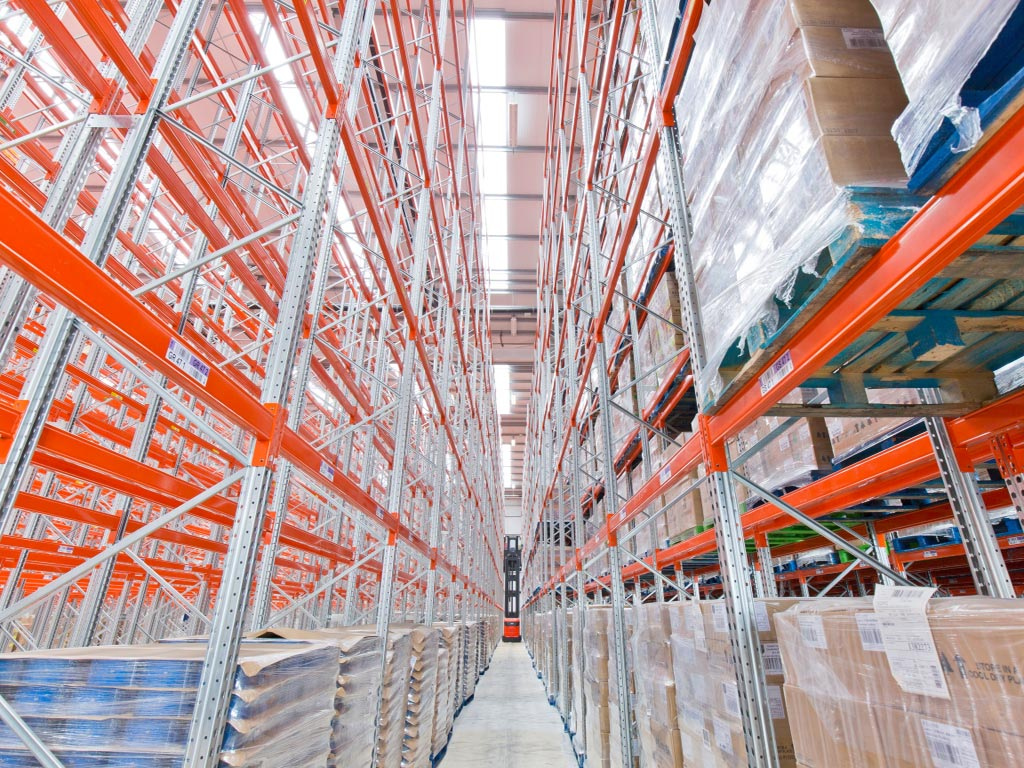
In the constantly changing environment of warehouses and storage facilities, maximizing space while ensuring operational efficiency is essential. Narrow Aisle Pallet Racking (NAPR) has become a favored solution, striking a balance between space utilization and accessibility. Let’s explore the advantages and disadvantages of Narrow Aisle Pallet Racking to gain a thorough understanding of its impact on warehouse operations.
Advantages of Narrow Aisle Pallet Racking Systems
Space Optimization
One of the main benefits of NAPR is its ability to maximize vertical space within a warehouse. By reducing the width of aisles between racks, these systems allow for the creation of more aisles, thereby increasing storage capacity. This is especially advantageous for facilities with limited square footage, enabling them to store a larger volume of goods without expanding their physical footprint.
Increased Storage Density
Narrow Aisle Pallet Racking systems offer higher storage density compared to traditional racking systems. The narrower aisle width allows for more pallet positions within the same floor space. This increased density is particularly beneficial for storing a large number of SKUs (Stock Keeping Units) in a single location, enhancing inventory management and accessibility.
Selective Accessibility
Despite narrower aisles, NAPR systems typically use specialized forklifts, such as turret trucks or reach trucks, designed to operate efficiently in tight spaces. This selective accessibility allows for precise picking and retrieval of pallets, leading to faster and more accurate order fulfillment and boosting overall warehouse productivity.
Improved Stock Rotation
Narrow Aisle Pallet Racking supports efficient stock rotation due to its selective accessibility. The ability to easily access specific pallets within the racks enables warehouses to implement a first-in, first-out (FIFO) inventory management system. This helps ensure that older stock is used before newer stock, reducing the risk of product obsolescence and minimizing waste.
Cost Savings
The space-saving design of NAPR systems not only optimizes storage capacity but also contributes to cost savings. By making better use of available space, warehouses can avoid the need for expensive expansions or additional facilities. Moreover, the efficient use of space can lead to reduced energy consumption, as lighting, heating, and cooling requirements are proportionally lower in a well-organized, compact space.
Disadvantages of Narrow Aisle Pallet Racking Systems
High Initial Investment
Implementing Narrow Aisle Pallet Racking (NAPR) systems involves a substantial upfront investment. This includes the cost of specialized forklifts, rack structures, and necessary infrastructure modifications to accommodate the narrower aisles. Although the long-term benefits may outweigh the initial expenses, businesses must carefully consider their budget constraints before opting for this storage solution.
Forklift Limitations
The efficient operation of NAPR systems depends heavily on the use of specialized forklifts capable of navigating narrow aisles. These forklifts are typically more expensive than standard ones and may require additional operator training. Furthermore, if a facility already owns a fleet of conventional forklifts, transitioning to NAPR might involve significant capital investment in new equipment.
Reduced Throughput Speed
While Narrow Aisle Pallet Racking excels in space optimization, it often results in reduced throughput speed. The narrow aisles and the need for precise maneuvering of specialized forklifts can slow down the movement of goods within the warehouse. This can be a disadvantage for facilities with high-volume, time-sensitive operations.
Limited Flexibility
NAPR systems are designed for specific pallet dimensions and forklift types, limiting a warehouse’s flexibility in handling various pallet sizes or adapting to changes in product dimensions over time. If a business experiences shifts in its product line or packaging requirements, it may face challenges accommodating these changes within the existing NAPR infrastructure.
Maintenance and Repairs
The complexity of Narrow Aisle Pallet Racking systems, particularly the specialized forklifts, can lead to higher maintenance and repair costs. Regular upkeep and periodic inspections are essential to ensure smooth system functioning. Downtime due to maintenance activities can impact overall warehouse efficiency, making it crucial for businesses to factor in these considerations when adopting NAPR.
FAQ’s
What are the main advantages of NAPR systems?
NAPR systems offer space optimization, increased storage density, selective accessibility, improved stock rotation, and cost savings by maximizing vertical space, accommodating more pallet positions, enabling precise picking, supporting FIFO inventory, and reducing the need for expansions.
How does NAPR maximize warehouse space?
NAPR reduces aisle width between racks, creating more aisles and increasing storage capacity, which is especially useful for warehouses with limited square footage.
What forklifts are used in NAPR systems?
Specialized forklifts like turret trucks or reach trucks are used, designed for efficient operation in narrow aisles.
Are there cost savings with NAPR systems?
Yes, by optimizing space usage and reducing the need for expansions, along with lower energy consumption in a compact space.
What are the disadvantages of NAPR systems?
High initial investment, reliance on specialized and costly forklifts, reduced throughput speed, limited flexibility for different pallet sizes, and higher maintenance costs.
How does NAPR improve stock rotation?
NAPR supports FIFO inventory management by allowing easy access to specific pallets, ensuring older stock is used first, reducing waste.
What are the maintenance needs for NAPR systems?
Regular maintenance and periodic inspections are required, which can lead to downtime and additional costs.
How does NAPR affect throughput speed?
Throughput speed may be reduced due to narrow aisles and the need for precise forklift maneuvering, which can slow down operations in high-volume warehouses.
Can NAPR systems handle different pallet sizes?
NAPR systems are designed for specific pallet sizes, limiting flexibility in adapting to changes in product dimensions or pallet sizes.
Conclusion
Narrow Aisle Pallet Racking (NAPR) systems are effective for maximizing space and improving storage density and stock rotation. They are ideal for facilities with limited space, offering cost savings and efficient use of vertical space. However, they come with high initial costs, specialized equipment needs, and potential downsides like slower throughput and limited flexibility. Evaluating these factors will help determine if NAPR systems are the right fit for your warehouse.