
You can rectify a pallet jack that fails to lift using two straightforward methods.
The initial approach tackles a prevalent problem: trapped air within the hydraulic system, which hampers hydraulic pressure, resulting in the jack’s inability to lift. To remedy this, ensure there are no heavy loads on the forks for safety, then vigorously pump the handle 15-20 times. This action expels trapped air from the hydraulic pump, leaving only hydraulic fluid within the system. Consequently, the pallet jack should regain its lifting capacity. This method offers a direct and efficient solution for many pallet jacks experiencing lifting issues.
The second method addresses another common issue – damaged O-rings, which may lead to air or hydraulic fluid leakage, disrupting the hydraulic system’s lifting function. To fix this, elevate the pallet jack, drain the hydraulic fluid, and replace the damaged O-rings with new ones. This repair reinstates hydraulic fluid pressure and ensures the pallet jack functions correctly. Although it requires more steps and precision, this method effectively resolves pallet jack lifting problems caused by O-ring damage.
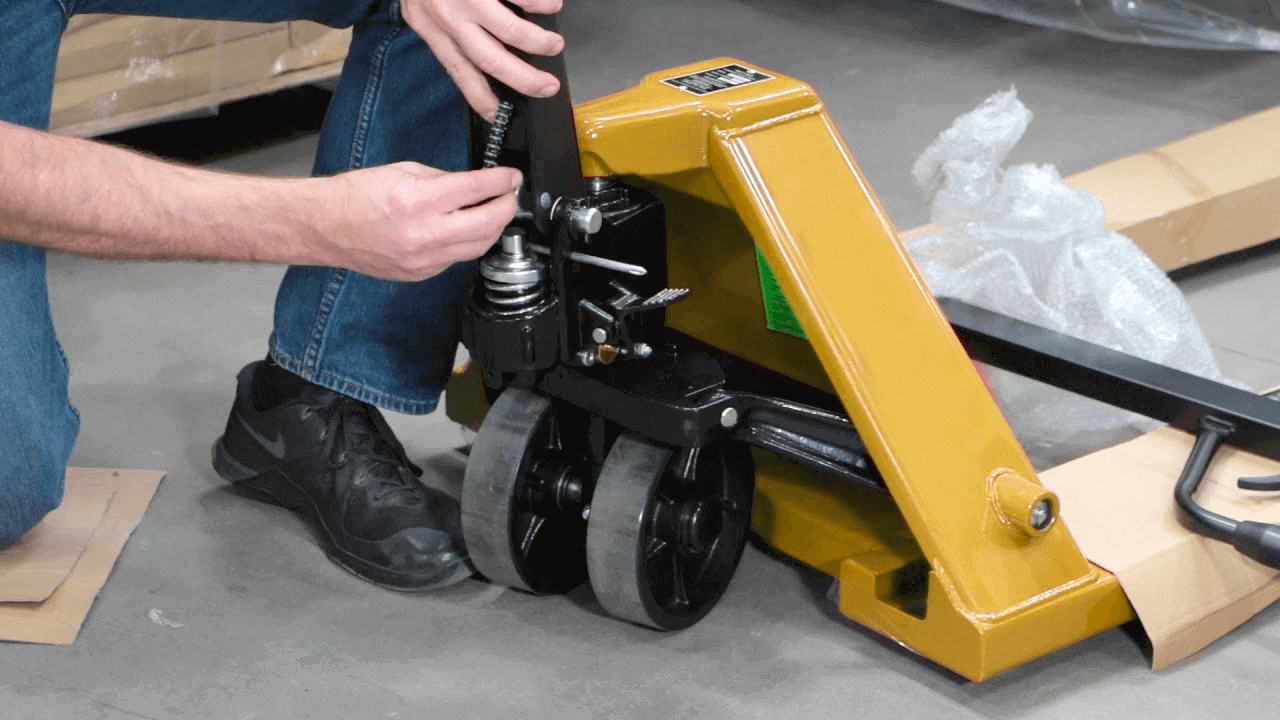
Troubleshooting Pallet Jack Lifting Problems (Identifying the Issues)
Before delving into the solutions, it’s essential to grasp the common issues that can impede your pallet jack from lifting as expected. These issues encompass:
- Low Hydraulic Fluid: A deficient hydraulic fluid level can hinder the jack’s lifting performance, causing it to either not lift at all or only partially.
- Air in the Hydraulic System: Trapped air in the hydraulic system can result in slow or uneven lifting, often occurring during fluid changes or due to leaks.
- Damaged and Worn Out O-rings: O-rings that are worn or damaged permit air to infiltrate the hydraulic system, leading to a loss of pressure during lifting.
- Leaky Hydraulic Pump: A leaky hydraulic pump can cause pressure loss or failure to sustain a load, as it’s responsible for generating and maintaining pressure within the system.
- Battery or Power Issues (For Electric Pallet Jacks): Insufficient power from low, dead, or faulty batteries in electric pallet jacks can prevent proper lifting.
- Debris and Mechanical Deterioration: Debris like dirt, dust, grease, or metal shavings can obstruct or damage hydraulic components, resulting in rough lifting or unusual noises.
To simplify matters, this article will concentrate on two primary issues: expelling trapped air from the hydraulic system and replacing damaged O-rings. These key problems often underlie the other mentioned pallet jack-lifting issues
📚 Also Read: Manual vs. Electric Pallet Jacks
Methods to Fix a Pallet Jack Not Lifting
Various methods may be required to address the cause of your pallet jack’s lifting issue. Below are some common fixing techniques and their respective procedures:
Method 1: Remove the Trapped Air by Pumping the Handle 15-20 Times
One of the most common issues causing a pallet jack to malfunction in lifting is the presence of air pockets within the hydraulic system. Since hydraulic pressure is vital for proper lifting operation, any trapped air can disrupt this pressure, resulting in improper functionality. Here’s how to tackle this problem:
Prioritize Safety: Ensure there are no loads on the forks to prevent potential accidents.
Activate the Handle: Engage in vigorous pumping of the handle around 15-20 times. This action will expel the trapped air from the hydraulic pump, leaving only hydraulic fluid within the system.
Confirm the Lift: Once the trapped air is entirely eliminated, your pallet jack should resume lifting correctly.
In most instances, this straightforward solution effectively rectifies the issue. However, if the problem persists, it may be necessary to consider more extensive repairs.
Method 2: Replace Damaged O-rings to Restore Hydraulic Fluid Pressure
While the hydraulic system typically maintains a tight seal, the presence of a worn, damaged, or cracked o-ring can allow air to seep through. If you observe moisture or hydraulic fluid leaking near the base of the pallet jack handle, it’s a clear indication of a damaged o-ring, which is causing the lifting issues.
Here’s the procedure for replacing them:
Required Materials and Tools:
- Jack stand or a block of wood
- Allen wrench
- Phillips head screwdriver
- Hammer
- Pliers
- New O-ring
- Hydraulic fluid
Step 1: Raise the Pallet Jack
Begin by lifting your pallet jack to a suitable height, ensuring that the drive wheels are off the ground. You can achieve this using a jack stand or a wooden block. Elevating the jack is essential to provide unrestricted access to the O-rings and hydraulic components.
Step 2: Drain the Hydraulic Fluid
To replace the damaged O-rings, you\’ll need to drain the hydraulic fluid from the pallet jack. Carefully loosen the screw securing the reservoir cover using an Allen wrench. Pump the handle several times to ensure thorough drainage and remove all remaining hydraulic fluid.
Step 3: Remove the Lower Lever
After draining the hydraulic fluid, remove the lower lever. A pin holds it in place. Gently tap the pin with a hammer and Phillips head screwdriver to release it. This step allows access to the O-rings and valve cartridge.
Step 4: Replace the Damaged O-ring
Proceed to replace the damaged O-ring. Use pliers to grasp the end of the valve cartridge and pull out the old O-ring. Wipe down the area where the new O-ring will sit to ensure cleanliness and proper seating.
Step 5: Install the New O-ring
Position the new O-ring in place and cover it with the valve cartridge cover. Secure the cover with the pin to lock the O-ring in position.
Step 6: Reassemble the Lower Lever
Reinsert the lowering lever into the side of the pump body and secure it with the retaining pin. Ensure it is firmly seated.
Step 7: Secure the Reservoir Cover
Replace the screw into the pump body and tighten it using the appropriate tool to seal the hydraulic system securely.
Step 8: Test the Pallet Jack
Finally, refill the pallet jack with the correct hydraulic fluid. Test the jack to ensure it lifts as expected. If it functions properly, your repair is successful, and the pallet jack should be back in working condition.
FAQ’s
How can I tell if my pallet jack has trapped air in the hydraulic system?
One common indication is if the pallet jack is lifting slowly or unevenly. Additionally, if you notice any unusual noises during lifting, it could suggest the presence of trapped air.
What should I do if my pallet jack is not lifting at all?
If your pallet jack is not lifting at all, it could be due to various reasons such as low hydraulic fluid, trapped air, or damaged O-rings. It\’s best to follow the troubleshooting steps outlined in the article to identify and address the specific issue.
How often should I check the hydraulic fluid level in my pallet jack?
It\’s recommended to regularly check the hydraulic fluid level in your pallet jack, especially before each use. This ensures that the jack operates smoothly and efficiently.
Can I use any type of hydraulic fluid for my pallet jack?
It\’s essential to use the manufacturer-recommended hydraulic fluid for your pallet jack to ensure optimal performance and prevent damage to the hydraulic system.
What if I don’t have all the required tools and materials for replacing damaged O-rings?
If you don’t have all the necessary tools and materials, it\’s best to acquire them before attempting the repair. Using the correct tools and materials ensures the job is done correctly and safely.
My pallet jack is electric. Can I still use the methods mentioned in the article to fix lifting issues?
Yes, the methods outlined in the article can be applied to both manual and electric pallet jacks. However, for electric pallet jacks, additional considerations may need to be taken into account, such as battery or power issues.
How long does it typically take to complete the process of replacing damaged O-rings?
The time it takes to replace damaged O-rings can vary depending on factors such as experience level and the extent of damage. On average, it may take anywhere from 30 minutes to an hour to complete the process.
Are there any safety precautions I should take before attempting to fix my pallet jack?
Yes, it\’s crucial to prioritize safety when working on or around pallet jacks. Ensure the jack is securely stabilized before beginning any repairs, and always wear appropriate personal protective equipment (PPE) such as gloves and safety glasses.
Conclusion
Resolving pallet jack lifting issues requires a systematic approach. Trapped air and damaged O-rings are common causes, but they can be efficiently addressed using the methods outlined. Regular maintenance and adherence to safety precautions are crucial for optimal performance. By following these steps, you can ensure your pallet jack remains a reliable tool for material handling tasks.